Book Review: Elegance

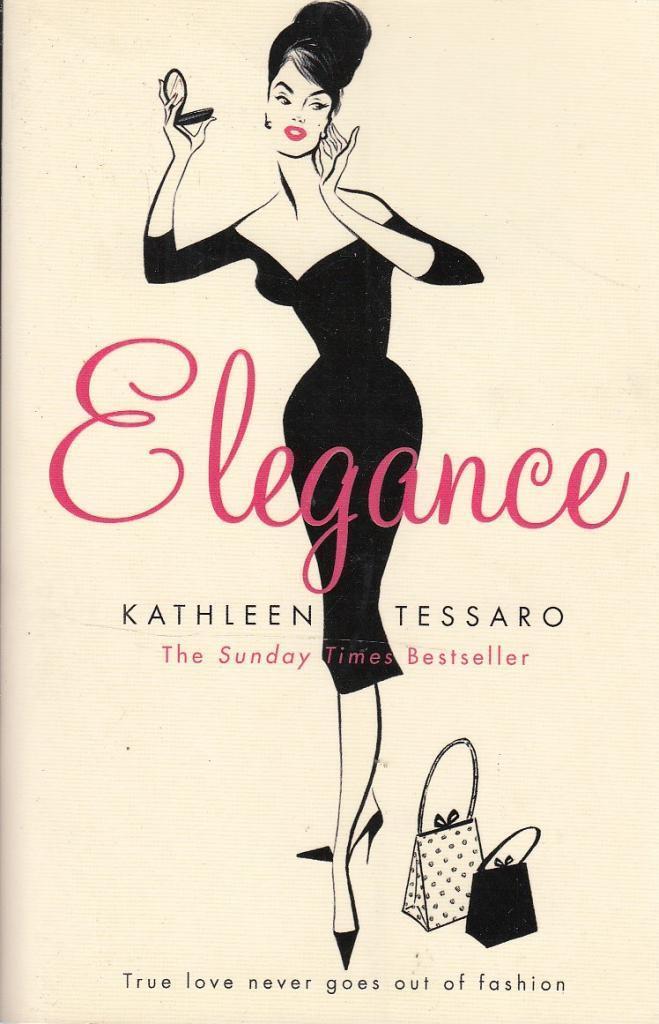
Today I want to share with you my review of a delightful little book, “Elegance” by Kathleen Tessaro. If any of you are familiar with Madame Dariaux’s concise encyclopedia by the same name and loved it — you will appreciate this book. It follows the transformation of Louise Canova from a drab, depressed and depressing person who is stuck in an unsatisfying marriage to an elegant woman of substance who is unapologetic in living her life.

I really like this story because I think its a journey that all elegant women share. Although Louise’s specific background may be different from ours, we all have times in our lives when we have to choose between what is right and what is easy, an opportunity to express out highest ideals or to stifle that expression out of fear of change.

Louise’s journey is structured with passages from Madame Dariaux’s iconic book that set the tone for her metamorphosis. I will admit, it is a rather banal story, but the question of what elegance actually meant to me was what made it interesting for me.

At a certain point in the book, Louise gets fed up with trying to become the “perfect” elegant lady and decides to live for the moment with the exclamation that “life’s too short!”. She tosses everything she learned about elegance in the bin (including her chic wardrobe) and trades that in for impulsive nights at the trendiest clubs, expensive purchases from this season’s hottest fashions, and the dazed and hungover mornings that follow suit. She starts to interact with the world around her differently and her experiences shift as a result — and not in a way that ultimately served her true objectives. But, she realizes all of this and she eventually finds her way back thanks to a friend and a hilarious yet poignant incident at The Ritz.

By the end of the book we learn that elegance is not about appearances or about belonging to a certain social circle. Elegance is a state of mind that is reflected on the outside of a person. It is the daily practice of refining and cultivating the experience of quality emotions in our lives. Fittingly, the book does not end on a note of resolution. We see that Louise is starting to settle into her new life and enjoying all that she has to appreciate, but with the new awareness that she needs to remain in touch with her values and practice expressing them on a daily basis. Perhaps by reading this book it will trigger you to start nurturing quality moments in your own life, or if you are satisfied with your life, to go deeper into those moments because after all, there is no “destination elegance” — we all must find it everyday.


signature

Book Review: The Golem and the Jinni

I just finished reading this book over the weekend and I’d like to give you my thoughts on it.

Its different from most books I read in that I don’t tend to gravitate towards historical fiction but the title grabbed me from the shelf. I absolutely love reading about jinn and listening to jinn stories. For those of you who don’t know, a jinn is a creature of smokeless fire that lives, reproduces and dies like humans do and inhabit the earth along with us. There is an entire chapter dedicated to them in the Qur’an and along with humans and angels, they are beings that are intelligent and able to judge right from wrong. The word “genie” comes from the word jinn and although they don’t go around granting wishes, they can change into just about any form they wish and travel great distances in a short amount of time. I can go on and on about jinn, but if you’re interested there is a youtube series called “Jinn and the Unseen World” which I highly recommend.

As for the book itself, it was an easy and entertaining read. The main plot follows two different supernatural creatures, a golem and a jinni, and their lives in 19th century New York as the past events that led them to being in New York come back to destroy them. There’s an evil wizard, Kabbalistic magic, tragedy, death and romance all mixed in the story that is set between flashbacks to hundred of years in the past. A past that the reader learns bit by bit as the story develops which is necessary to the climactic finale between jinni, golem and wizard.

It was interesting to find out what a golem was and to read a story where the characters are all basically Jewish, Christian or Muslim. It was especially interesting that the author chose the main characters to be from Jewish and Muslim traditions and I can’t speak for the golem, but her descriptions of the jinn were perfect. Although its impossible to know exactly the logistics of how a jinn exists in this world — all we have are hadiths to go off of — I thought the author did a really great job of taking what we know about the jinn and putting in her own twist on their capabilities. For instance, it was clever of her to take the fact that they are made of fire and make the main protagonist, Ahmed, a gifted metal smith.

All in all, I thought this was a fine read. This was Helene Wecker’s first novel which is pretty hard to believe since the story is so intricate and thoughtfully constructed. If you’re looking for a read that has a little bit of fantasy, history and drama this is going to be perfect for you.

signature

Reflections: Eid Al-Adha 2016

Eid al-adha has begun and will last until Thursday. The most holy of our two holidays in which we remember one of the main trials of Ibrahim’s life — to obey Allah by the sacrifice of his son, Ismail.

Every year this holiday comes and every year I find it very difficult to relate to that level of iman. It’s too incredible for my little brain. The fact is that I just don’t hear about things like that happening nowadays.

If you take a moment and really imagine the story of Ibrahim’s sacrifice as more than just a story you read about, but as what it is — a real historical event — you’ll know what I mean.

What if you heard about an incident with a neighbor who was a good man. A man who was very pious and God-fearing and you hear about what happened with his son who was also very pious and good. You hear that one day he had a dream in which God told him to sacrifice his son to show his faith. Right when he’s about to slit his son’s throat, at the eleventh hour, a miracle happens and he sees that his son has been replaced by a dead ram and that his son is unharmed.

It’s different when you hear it like that, isn’t it? That kind of faith doesn’t exist in everyone or everywhere. I wish I could say that I would do the same if I was in his position. But honestly, I most likely won’t. I don’t know anyone who would either. But that’s why we remember it every year since about 1700 BC.

It was an incredible leap of faith that continues to baffle, awe, and inspire generations of people. It never gets old and it never gets topped.

It makes me look at all of the things I’ve wanted to improve in myself in order to get closer to Allah. One of the most difficult and enduring of which is to memorize the Qur’an. Ever since I converted I’ve had the thought of memorizing this great book gnawing at my brain. Is it the voice of God telling me to do it? I’m guessing not. Most likely it’s just my habit of setting high expectations for myself that is making me want to do this, but still, maybe those thoughts that challenge us to improve and test our strength are the ones we need to listen to.

Just like Ibrahim who listened to a dream he had, maybe we need to listen to our dreams and have some faith in God for everything to work out for us.

signature

Book Review: Approaching the Qur’an

It has been a while hasn’t it?

Between Ramadan, the new house, the new job, I haven’t been able to find much time to read, let alone write about what I’ve read. I’ve just settled into my a routine so I should be able to return to my usual antics. Then again, I am going to Korea in two weeks so I guess maybe not. We shall see.

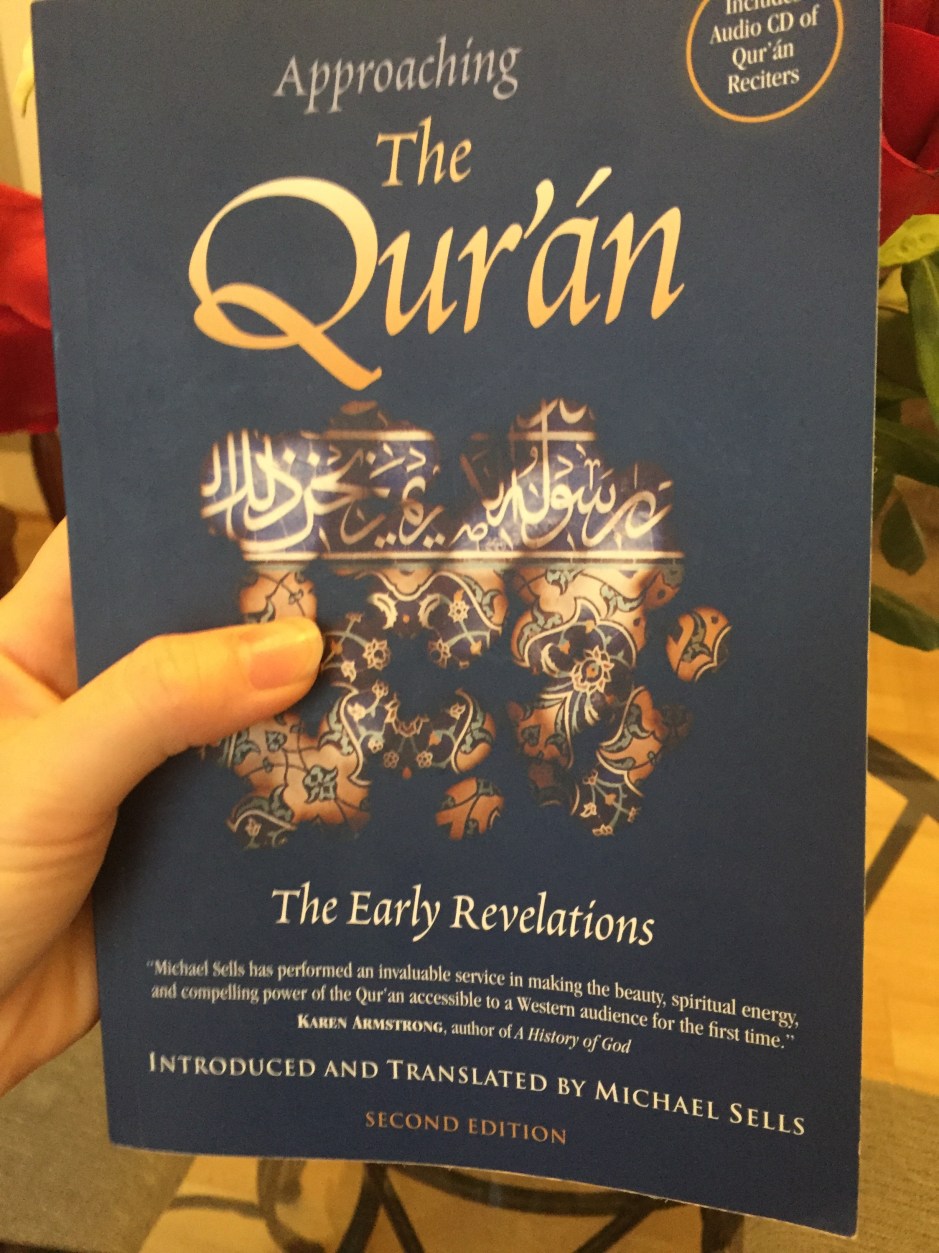
Anyway, last night I finished reading “Approaching the Qur’an” by Michael Sells. You may have heard about it before as this book was at the crux of a contentious lawsuit brought forward in 2002 by three students at the University of North Carolina, whose incoming students were assigned it as a summer reading assignment. But never mind all of that. If you haven’t read it before — like me — and you are non-Arabic speaking Muslim — like me, this book will let you experience first-hand the poetry of the Qur’an.

One of my greatest goals is to be able to one day understand the Qur’an as Arabic speakers do. To listen to a recitation and be moved by the rich literature and poetry of the Qur’an is something that I so dearly want to experience. Until my understanding of Arabic and Qur’anic grammar reaches that level, I will have to settle for the English translations. While the translations may help me know what is being said, they are useless in conveying the same poetic impact that it brought upon those who heard it when it was first revealed.

This book does not cover the entire Qur’an. Sells translates Al-Fatiha, a portion of sura 53 (The Star), and then suras 81 through 114. Sells attempts translate not only the meaning of the words, but also the poetic devices of the original text. Reading Sells’ translations makes me feel as though I am reading the Qur’an for the first time. I felt moved in a way that I wasn’t before and I could understand how impactful the text could be especially in a recited format. Nevertheless, this is a translation and there is always something of meaning lost when a text a translated, so of course this will be the case with the Qur’an. However, to give you a taste of what I mean, here is a comparison of Sells’ translation and the Sahih International translation of sura 104, “The Slanderer”:

Sahih International

Woe to every scorner and mocker

Who collects wealth and [continuously] counts it.

He thinks that his wealth will make him immortal.

No! He will surely be thrown into the Crusher.

And what can make you know what is the Crusher?

It is the fire of Allah , [eternally] fueled,

Which mounts directed at the hearts.

Indeed, Hellfire will be closed down upon them

In extended columns.

Sells’

Woe to every backbiting slanderer

Who gather his wealth and counts it

thinking with his wealth he will never die

Nay, let him be thrown into the Hútama

And what can tell you of the Hútama

The fire of God, stoked for blazing

rising up over the heart

covering them in vaults of flame

stretching out its pillars

There’s a fundamental difference between those two translations. The meaning is the same, but the impact lies in not only what is said but also what is not said in Sells’ version. I so wish that Sells could come out with a complete translation of the entire Qur’an. If there are any non-Muslims out there reading this review who would like to read a translation of the Qur’an, I urge you to start with this book. It doesn’t have the whole entire Qur’an, but it gives you a hint of the power that the original text brings to its readers and listeners in Arabic. The book also contains a CD in the back that allows to you listen to the Qur’an since the Qur’an is truly intended to be recited and listened to — not read. Even the Muslims out there who depend on the English translations to understand what is being said, read this! It will bring a whole new dimension to the suras you’ve read before and possibly some new meaning to you as well.

Book Review: The Fred Factor by Mark Sanborn

“When your life is at low tide, when your professional commitment is wavering and you just want to get the job done and go home at the end of the day, what can you do?”

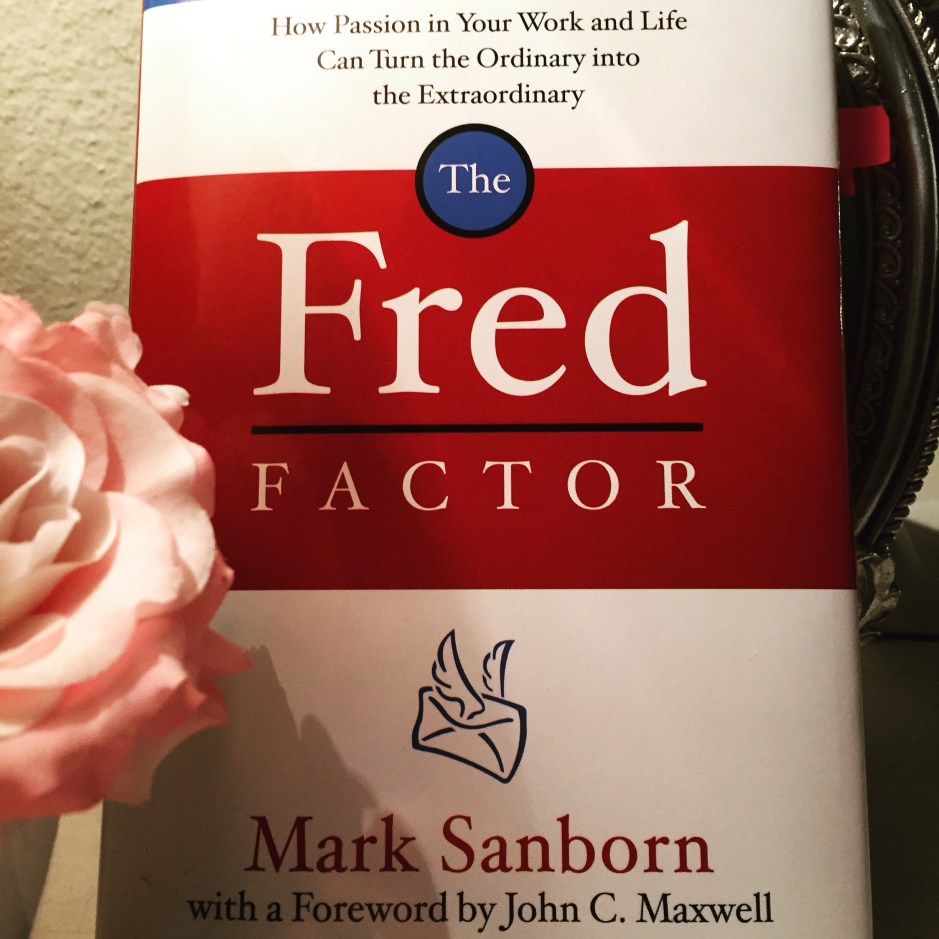
This small, yet engaging book answers this question by examining the work ethic and commitment to service of one extraordinary person who is employed in a seemingly ordinary position — that of a postman. His name is Fred and the book begins with an interaction between him and the author that inspires him to write this book on transforming any life — your life into the extraordinary through 4 basic principles: how to make a real difference each and everyday, how to be more successful by building strong relationships, how to create value for others and how to reinvent yourself. Understanding these 4 principles gave me a new perspective on the true influence that I hold in my life and others’ lives and I’ll give you a couple of tidbits from the second and third principle that spoke to me.

As far as building relationships go, I consider myself an introvert. This doesn’t mean that I’m shy, in fact I love giving presentations in front of large audiences, but I don’t like making small talk or speaking to others about myself on a personal level (don’t I sound lovely!) so when I approached the subject of relationships in this book, I knew that I’d have a lot of takeaways. There are “The Seven Bs of Relationship Building” according to the author and the first principle is: Be real. We’ve all heard this before, but what caught my attention was that “this is the direct opposite of the prevailing wisdom in our culture today, which is ‘fake it until you make it'”. I’ve read books and watched videos on this subject and have tried to apply this principle but in the end I’ve always felt like I’m becoming someone that isn’t natural or genuine. Sanborn suggests the alternative to “always do your best at being yourself…let these actions come out of who you really are, what you truly believe in, and the things you are committed to.” What a breath of fresh air this principle was to me!

The third principle is about creating value for others without throwing money at the problem. Sanborn has a lot to advice on how to accomplish this, but the simplest for me was to “do what you’ve always done, but do it better than you’ve ever done it” or as H.J. Heinz coined in 1869, “do the common thing uncommonly well”. If we all find ways to ways to do common things (sending emails to clients, taking phone calls, etc.) very well, we would probably be able to transform these situations from negative to positive experiences or from good to world-class interactions. This principle made me brainstorm all of the ways, both big and small, that I interact with the world, not just at work, and think of ways to improve their quality.

I couldn’t possibly cover all of the valuable material that is shared in this book, so you’ll just have to read it yourself, but I’d like to leave you with this quote by Martin Luther King Jr. that I feel encapsulates the entire message of the book: “If a man is called to be a street sweeper, he should sweep streets even as Michelangelo painted or Beethoven composed music or Shakespeare wrote poetry. He should sweep streets so well that all the hosts of heaven and earth will pause to say, ‘Here lived a great street sweeper who did his job well.'”

signature