Stop Working On All of Your Goals

If you’re anything like me, you have a lot of projects and a lot of goals that you’re trying to achieve all at once. And if you find yourself in a cycle of starting, losing steam a few days in, stopping, feeling bad for stopping and then vowing you’ll finally see a project through this time, let’s do both of ourselves a favor and end this circus.

I have discovered a more effective way of finishing my goals sans the self-doubt and discouragement. It’s so simple, yet easy to overlook in a world that demands us to be bigger, faster, stronger. Here it is:

Begin only one goal at a time and focus on mastering your process

How I used to operate is, I would have a burst of enthusiasm that was probably inspired by my procrastination and start to work on a list of things that I wanted to achieve. I would start a blog, exercise everyday, learn Arabic, create a meal plan, read a book a week, and start writing a book all at once. I would have a lot of fun planning all of this out, but the longest I’ve ever gone on this sort of regime was probably 2 weeks. Not exactly a sufficient time frame to even begin to make a small dent in that list.

The reason I would inevitably give up on everything is that I had not yet mastered the different processes for each item on that list. I was being pulled in too many directions at once without firmly establishing the rhythm of even one project into my life.

What must be done instead is start with one. For example, if I was learning Arabic at the beginning of the month I would start my process by committing to study at least 10 pages from a self-guided language learning book, or 1 exercise a day, or whatever method of measurement is the right fit for me.

After I giving myself enough time to form the habit of learning Arabic, let’s say 1 month, I can add on starting a blog. I will commit myself to that new process of posting twice a week for a month before adding on another project. If at any point, I have begun to slip in my processes, I will need to remove the very last project that was added and wait another month before re-assimilating it.

It could be that I reached my mental or physical capacity for learning and working on new things, so instead of stopping all of my projects, I can sacrifice delaying one. This way I will strengthen my capability to learn and my other projects will continue moving along.

With this method of incrementally adding goals or projects to your list, I believe you will find yourself finishing them quicker. This method is really a system that helps you learn how to learn, which is an absolute necessity for success. It’s been a game changer for me and I you should try it too — I am asking you to do less after all!

Let me know what you guys think,

signature


Book Review: Approaching the Qur’an

It has been a while hasn’t it?

Between Ramadan, the new house, the new job, I haven’t been able to find much time to read, let alone write about what I’ve read. I’ve just settled into my a routine so I should be able to return to my usual antics. Then again, I am going to Korea in two weeks so I guess maybe not. We shall see.

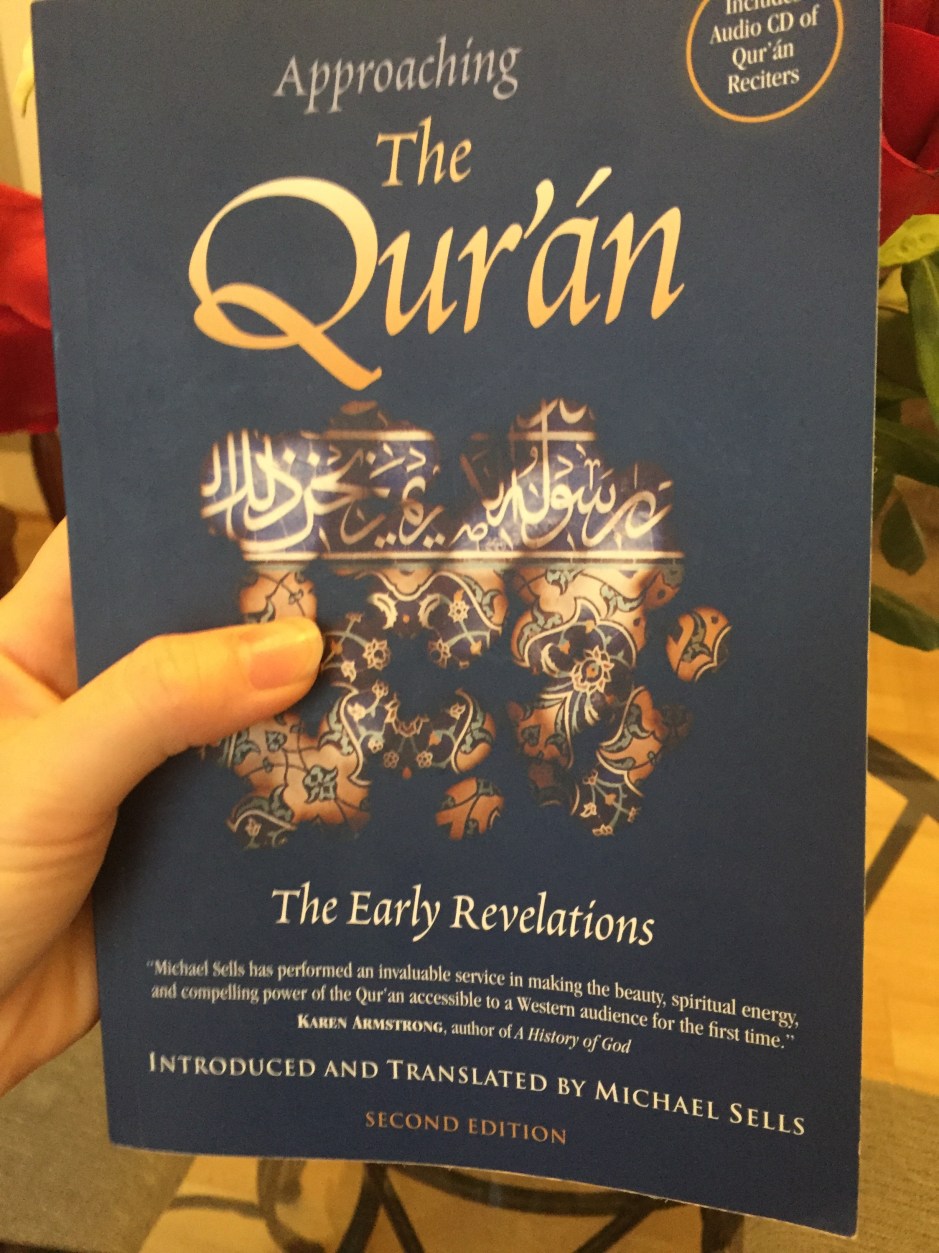
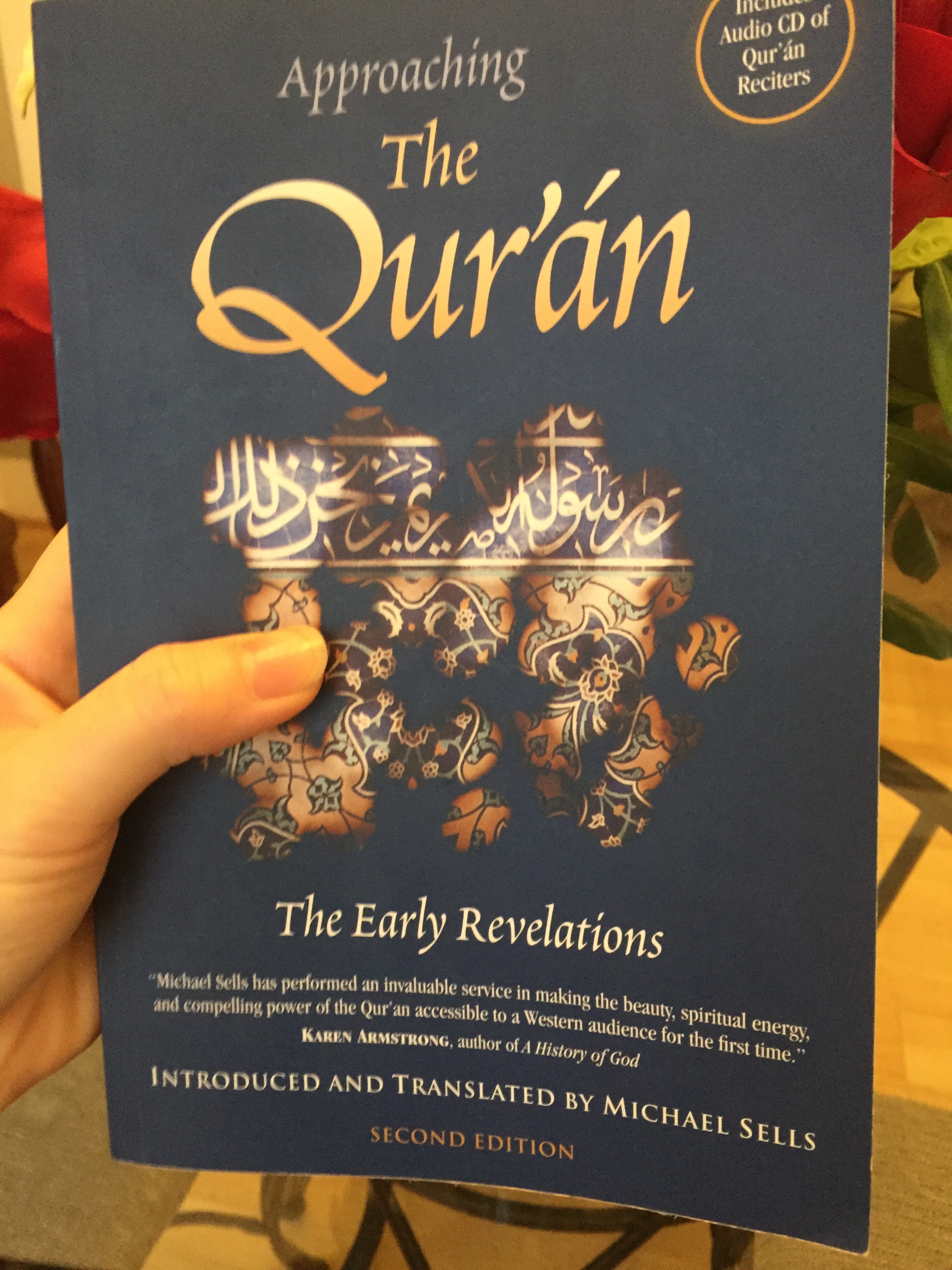
Anyway, last night I finished reading “Approaching the Qur’an” by Michael Sells. You may have heard about it before as this book was at the crux of a contentious lawsuit brought forward in 2002 by three students at the University of North Carolina, whose incoming students were assigned it as a summer reading assignment. But never mind all of that. If you haven’t read it before — like me — and you are non-Arabic speaking Muslim — like me, this book will let you experience first-hand the poetry of the Qur’an.

One of my greatest goals is to be able to one day understand the Qur’an as Arabic speakers do. To listen to a recitation and be moved by the rich literature and poetry of the Qur’an is something that I so dearly want to experience. Until my understanding of Arabic and Qur’anic grammar reaches that level, I will have to settle for the English translations. While the translations may help me know what is being said, they are useless in conveying the same poetic impact that it brought upon those who heard it when it was first revealed.

This book does not cover the entire Qur’an. Sells translates Al-Fatiha, a portion of sura 53 (The Star), and then suras 81 through 114. Sells attempts translate not only the meaning of the words, but also the poetic devices of the original text. Reading Sells’ translations makes me feel as though I am reading the Qur’an for the first time. I felt moved in a way that I wasn’t before and I could understand how impactful the text could be especially in a recited format. Nevertheless, this is a translation and there is always something of meaning lost when a text a translated, so of course this will be the case with the Qur’an. However, to give you a taste of what I mean, here is a comparison of Sells’ translation and the Sahih International translation of sura 104, “The Slanderer”:

Sahih International

Woe to every scorner and mocker

Who collects wealth and [continuously] counts it.

He thinks that his wealth will make him immortal.

No! He will surely be thrown into the Crusher.

And what can make you know what is the Crusher?

It is the fire of Allah , [eternally] fueled,

Which mounts directed at the hearts.

Indeed, Hellfire will be closed down upon them

In extended columns.

Sells’

Woe to every backbiting slanderer

Who gather his wealth and counts it

thinking with his wealth he will never die

Nay, let him be thrown into the Hútama

And what can tell you of the Hútama

The fire of God, stoked for blazing

rising up over the heart

covering them in vaults of flame

stretching out its pillars

There’s a fundamental difference between those two translations. The meaning is the same, but the impact lies in not only what is said but also what is not said in Sells’ version. I so wish that Sells could come out with a complete translation of the entire Qur’an. If there are any non-Muslims out there reading this review who would like to read a translation of the Qur’an, I urge you to start with this book. It doesn’t have the whole entire Qur’an, but it gives you a hint of the power that the original text brings to its readers and listeners in Arabic. The book also contains a CD in the back that allows to you listen to the Qur’an since the Qur’an is truly intended to be recited and listened to — not read. Even the Muslims out there who depend on the English translations to understand what is being said, read this! It will bring a whole new dimension to the suras you’ve read before and possibly some new meaning to you as well.

Eid Mubarak and Ramadan Reflections

We just finished fasting our last day of Ramadan and I wanted to wish those who were fasting a congratulatory “Eid Mubarak” to you all!

This Ramadan was especially trying for me and my husband since during this time we bought a house and moved into the house and experienced all of the uncertainty and stresses that go with that. At an especially challenging point of the process my husband and I just had to let go of all of the worry, frustration and anxiety and enter into space of surrender to Allah. Also, during this same time I was promoted to a my dream position with the company I work for. While this was happy news for me, it was still a change from what I was used to and between moving at home and moving into a new role at work, I was feeling very disoriented and not my usual self. We completed our istikhara and wished for Allah to facilitate this home-buying experience for us if it was for the best or to end it if it was not. We’ve always known that nothing is in our control and as much as we try to plan and prepare for things, in the end, Allah’s will supersedes all. We did end up by getting the house — alhamdulillah — and now that I am sitting here in my new home and prepared to start my new position next week, I see that nothing was ever truly in my control so there was no need to worry.

I hope that I am able to keep this lesson within me and refer to it whenever I find myself falling into a endless pit of fear and distress because everything always works out — sometimes in ways that you planned, often times in ways that you didn’t even imagine.

Once again, Eid Mubarak everybody and may Allah accept all of our fasts and efforts during this blessed month!

signature

Ramadan Cooking Tips

It’s that time of the year again! This year I wanted to make Ramadan extra special and do my utmost to spend this valuable time doing beneficial actions that would bring me more knowledge and hasana such as reading Qur’an, listening to lectures and writing in my Islamic journal, and less time being miserably tired in a hot kitchen. My household consists of me, my husband and my cat and since we both work outside of the home full-time, coming home after a long days work to start preparing for Iftar is probably the last thing I want to do. Here are some tips I came up with to help with that:

Cook in bulk


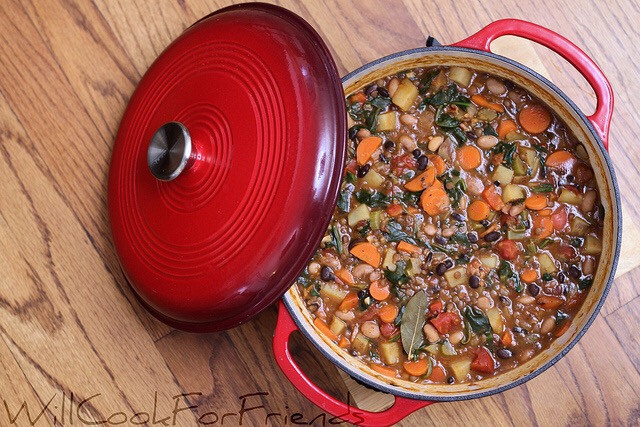
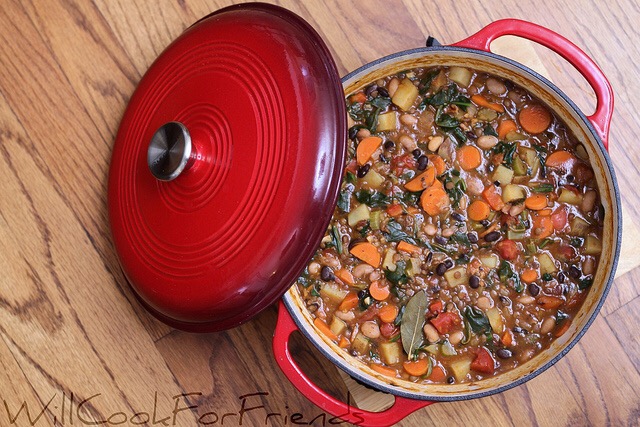
For each Ramadan meal, my husband and I have a sort of routine that consists of a soup, salad, breek (Tunisian fried egg and potato pocket), and then the main dish which is usually a pasta or rice dish. As soon as I found out Ramadan was today, last night I spent time cooking up a huge dish of chorba (Tunisian soup) and have it stored in the refrigerator at the moment. I also prepared the filling for the breek so that all I have to do is fill the phyllo dough and fry them for fresh-made breek every night. i estimate that I’ve cooked enough breek and chorba to last us through Thursday. This means that all I have to do is cook a pasta or rice dish when I get home from work to have a delicious spread for Iftar, which will be no big deal since I’ve already completed tip number two below.

Prepare your ingredients


Last night as I was cooking, I diced one extra onion, minced a two bunches of parsley, peeled the potatoes, already minced the garlic, and cleaned and trimmed the meat so that today when I arrive, all I have to do is put the ingredients in the saucepan and I’ll have a delicious meal that took no effort to prepare. Cutting and dicing takes up the majority of your time and so does the clean up that needs to get done after doing all of that. Preparing and storing your basic ingredients takes the time and effort out of your Ramadan meal.

Cook and store time-consuming dishes during the weekend


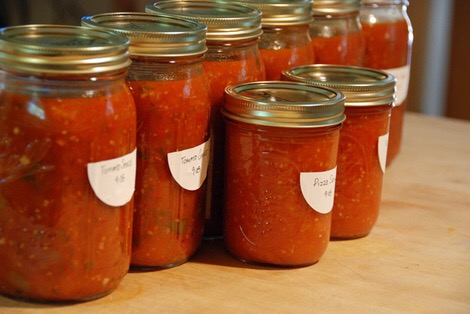
Like I mentioned before, I cooked a big pot of soup on Sunday that will probably last me through Thursday but I can do the same for the pasta sauces that I make. Sauces and soups are time consuming dishes since they need to sit and simmer in order to bring out the best flavors. This would be best to do during the weekend when I can take my time and not try to rush it because I’ve got other dishes to prepare in time for Maghrib. Once I’ve made the sauce in bulk, I wait for it to cool and then store the sauce and freeze until I’m ready to use it.

So there you have it, those are my 3 tips for easy Ramadan cooking. If you choose to use any of them I hope they help you to maximize your time on more beneficial actions. Ramadan is about the benefits to your soul and I plan on writing more posts on that — but it sure is nice to have a good meal at the end of the day!

signature

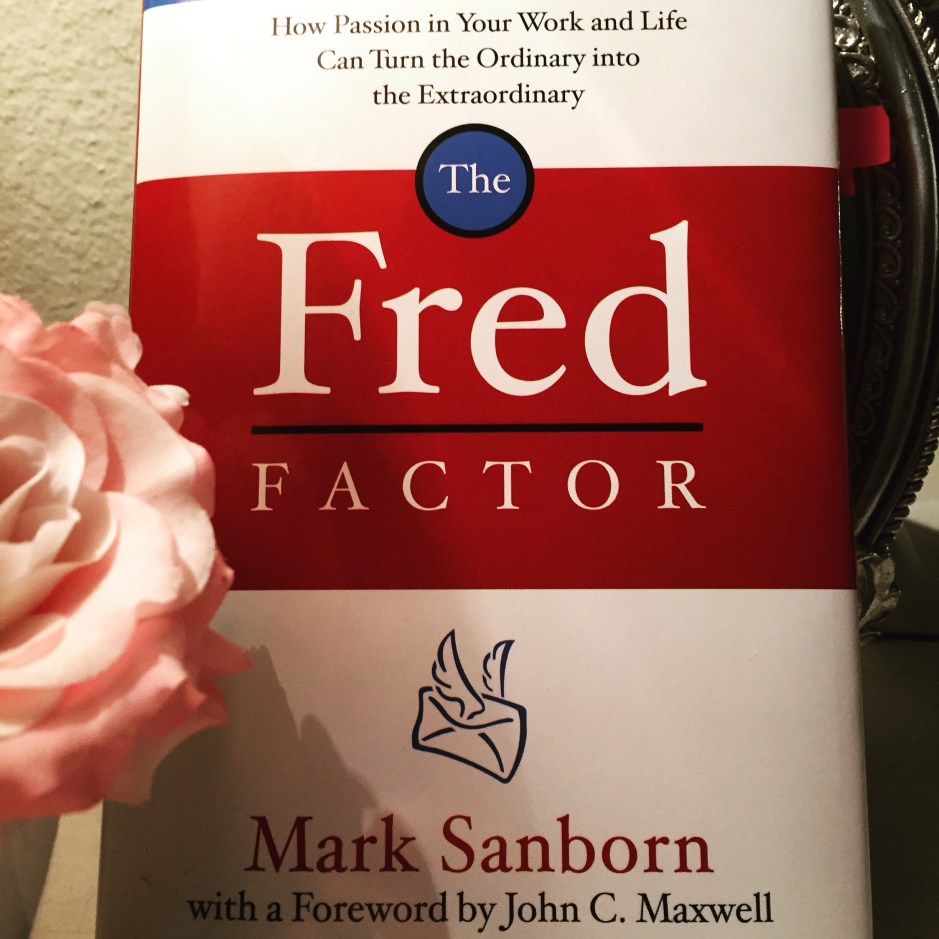
Book Review: The Fred Factor by Mark Sanborn

“When your life is at low tide, when your professional commitment is wavering and you just want to get the job done and go home at the end of the day, what can you do?”

This small, yet engaging book answers this question by examining the work ethic and commitment to service of one extraordinary person who is employed in a seemingly ordinary position — that of a postman. His name is Fred and the book begins with an interaction between him and the author that inspires him to write this book on transforming any life — your life into the extraordinary through 4 basic principles: how to make a real difference each and everyday, how to be more successful by building strong relationships, how to create value for others and how to reinvent yourself. Understanding these 4 principles gave me a new perspective on the true influence that I hold in my life and others’ lives and I’ll give you a couple of tidbits from the second and third principle that spoke to me.

As far as building relationships go, I consider myself an introvert. This doesn’t mean that I’m shy, in fact I love giving presentations in front of large audiences, but I don’t like making small talk or speaking to others about myself on a personal level (don’t I sound lovely!) so when I approached the subject of relationships in this book, I knew that I’d have a lot of takeaways. There are “The Seven Bs of Relationship Building” according to the author and the first principle is: Be real. We’ve all heard this before, but what caught my attention was that “this is the direct opposite of the prevailing wisdom in our culture today, which is ‘fake it until you make it'”. I’ve read books and watched videos on this subject and have tried to apply this principle but in the end I’ve always felt like I’m becoming someone that isn’t natural or genuine. Sanborn suggests the alternative to “always do your best at being yourself…let these actions come out of who you really are, what you truly believe in, and the things you are committed to.” What a breath of fresh air this principle was to me!

The third principle is about creating value for others without throwing money at the problem. Sanborn has a lot to advice on how to accomplish this, but the simplest for me was to “do what you’ve always done, but do it better than you’ve ever done it” or as H.J. Heinz coined in 1869, “do the common thing uncommonly well”. If we all find ways to ways to do common things (sending emails to clients, taking phone calls, etc.) very well, we would probably be able to transform these situations from negative to positive experiences or from good to world-class interactions. This principle made me brainstorm all of the ways, both big and small, that I interact with the world, not just at work, and think of ways to improve their quality.

I couldn’t possibly cover all of the valuable material that is shared in this book, so you’ll just have to read it yourself, but I’d like to leave you with this quote by Martin Luther King Jr. that I feel encapsulates the entire message of the book: “If a man is called to be a street sweeper, he should sweep streets even as Michelangelo painted or Beethoven composed music or Shakespeare wrote poetry. He should sweep streets so well that all the hosts of heaven and earth will pause to say, ‘Here lived a great street sweeper who did his job well.'”

signature